
Intricate Ink Art of a Classical Indian Dancer: A Celebration of Grace and Tradition
Explore a detailed ink illustration of a classical Indian dancer adorned in traditional attire, capturing elegance, movement, and cultural richness through intricate linework and design.
Pekham
4/1/20262 min read
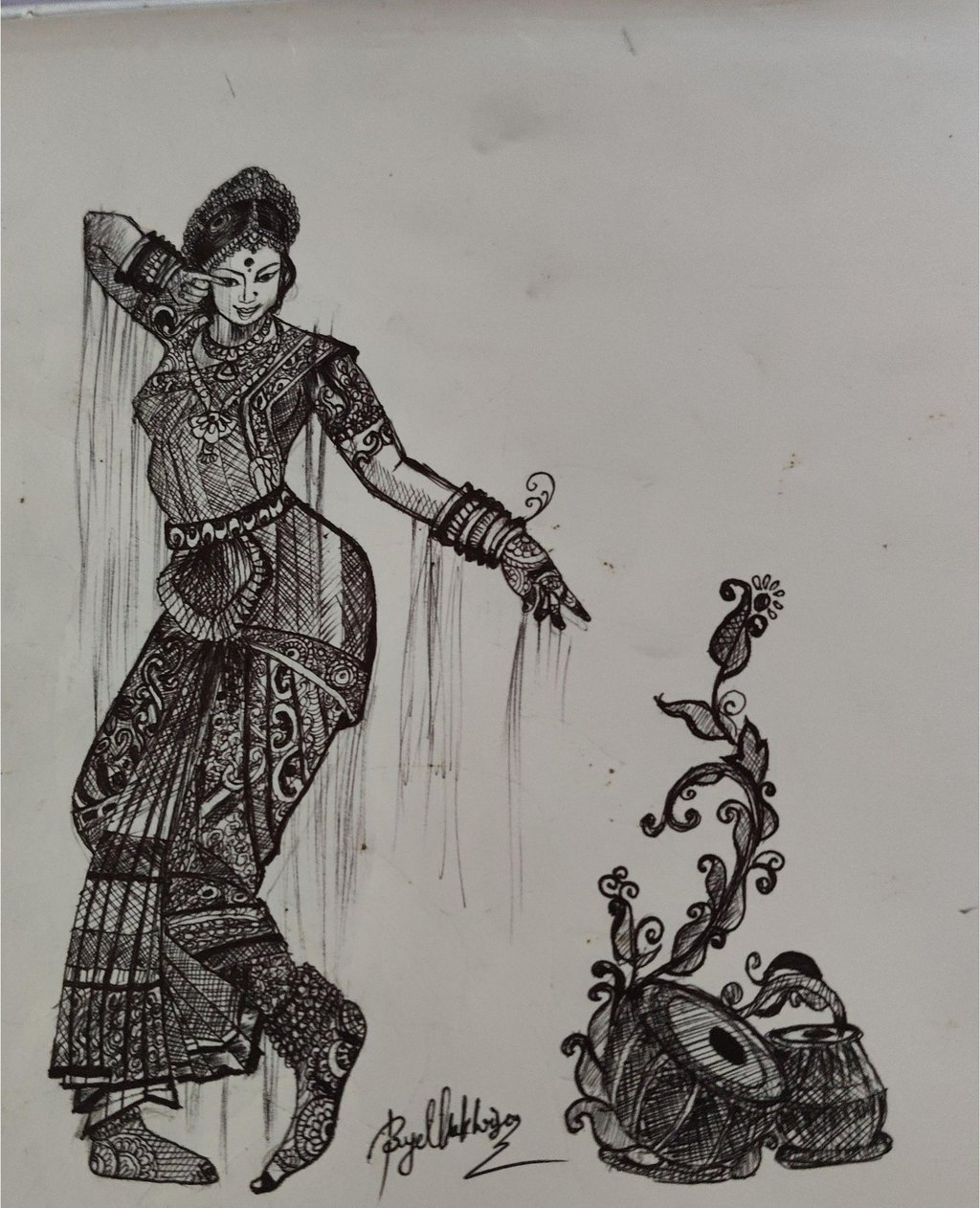
Art has a unique ability to freeze motion in time, and this exquisite ink illustration does exactly that. The artwork presents a classical Indian dancer mid-pose, embodying grace, rhythm, and storytelling through every carefully drawn line.
A Dance of Lines and Details
At first glance, the dancer’s posture immediately draws attention. Her stance is dynamic yet balanced, suggesting a moment within a larger performance. One arm is elegantly raised near her face, while the other extends outward, guiding the viewer’s gaze across the composition. The positioning of her legs reflects a traditional dance pose, full of precision and control.
What makes this artwork truly captivating is the intricate detailing. The artist has used fine pen strokes to create elaborate patterns across the dancer’s attire. From the folds of her garment to the ornate jewelry adorning her neck, arms, and ankles, every element is thoughtfully rendered. The textures resemble traditional Indian textiles, rich with cultural motifs and rhythmic repetition.
Expression and Emotion
The dancer’s facial expression is calm and composed, reflecting concentration and inner poise. Her eyes, delicately shaped, suggest storytelling—a hallmark of classical Indian dance forms where expressions (abhinaya) play a crucial role. Even without color, the depth of emotion is conveyed through subtle shading and line variation.
Adornment and Cultural Symbolism
The jewelry and costume are not merely decorative; they carry cultural significance. The layered ornaments, bangles, and anklets hint at classical dance traditions such as Bharatanatyam or Odissi. The headpiece and draped attire further enhance the authenticity, grounding the artwork in heritage.
The Supporting Motif
To the right of the dancer, a beautifully illustrated decorative element emerges—featuring a stylized pot and flowing floral vines. This secondary composition balances the frame and adds a narrative quality. The pot may symbolize abundance or tradition, while the curling vines echo the fluidity of the dancer’s movements.
The Beauty of Monochrome
Rendered entirely in black ink, the absence of color does not limit the artwork—it elevates it. The monochrome palette emphasizes form, contrast, and detail. Cross-hatching and fine linework create depth, allowing the viewer to appreciate the craftsmanship without distraction.
Final Thoughts
This piece is more than just a drawing; it is a tribute to tradition, discipline, and artistic patience. The artist has successfully translated the energy of dance into a still image, using only pen and imagination. It invites viewers to pause, observe, and immerse themselves in the delicate harmony of movement and design.
Whether you are an art enthusiast or someone who appreciates cultural expression, this illustration stands as a beautiful reminder of how powerful simplicity and detail can be when combined with passion.